


Aluminum Double Hung Window Balances: Diagnosing Sashes That Will Not Stay Up
Aluminum Double Hung Window Balances: Diagnosing Sashes That Will Not Stay Up
When an aluminum double hung window sash will not stay up, the problem may involve a failed balance, a disengaged pivot shoe, or a mismatch between balance capacity and sash weight. Identifying the cause before ordering parts helps reduce repeat visits and restore reliable operation. The useful distinction is between a sash that has lost counterbalance support and one that binds, tilts, or catches because its guides or hardware are damaged.
A balance offsets sash weight; it does not repair distorted tracks or compensate for incorrect glazing. Diagnosis therefore needs to follow the entire load path: sash attachment, shoe or carrier, balance mechanism, and frame anchor. Replacing the most visible broken part without checking those connections can leave the original fault unresolved.
Secure the sash before testing the mechanism
Treat a falling sash as a safety defect. Keep occupants away from the opening, close the affected sash if that can be done safely, and prevent further use until it is secured. Do not rely on a stick, friction in the track, or the remaining balance as the sole support during inspection. Use a suitable sash support and a second technician where the sash weight or access conditions require one.
Balance springs can retain energy even when the sash no longer stays open. Do not disconnect anchors, turn pivot-shoe cams, or release spring assemblies while they are carrying an unsupported sash. Follow the window manufacturer's removal procedure; tilt and non-tilt designs require different handling. If the mechanism cannot be identified, stop before releasing it.
Record the window location, affected sash, visible labels, and recent repair history. Ask whether the problem appeared suddenly, developed gradually, or began after glazing replacement or tilt cleaning. These details narrow the inspection, but none establishes the cause on its own.
Read the symptoms without mistaking friction for support
A sash that drops immediately suggests little effective counterbalance support. A sash that slowly creeps down may have inadequate spring force, an incorrect replacement rating, or a weakened mechanism. If it rises by itself or is unusually difficult to pull down, excessive balance force is a possibility. Binding can produce similar resistance, so these are inspection clues rather than final diagnoses.
- One corner drops or the sash racks: check the balance connection, pivot bar, shoe, and guide on that side. Unequal resistance can also skew the sash.
- The fault appeared after tilt cleaning: inspect pivot engagement and shoe position before assuming a spring has failed.
- Movement catches at one height: look for a damaged channel, projecting fastener, displaced weatherstrip, or debris at that location.
- The sash changed behavior after reglazing: verify its current weight against the installed balance specification.
With the sash controlled, observe movement through the permitted travel. Compare resistance on the left and right, and note whether the meeting rail remains level. Do not force the sash past a catch: that can damage an otherwise serviceable shoe, cord, or pivot bar and obscure the original problem.
Identify the balance family before selecting parts
Aluminum frame construction does not identify the balance system. Different window series can use different mechanisms, and an older unit may already contain replacement hardware. Inspect the actual assembly rather than choosing parts from the frame material or approximate window size.
Channel balances
These typically have a metal channel containing a spring and cord-and-pulley arrangement. Check for frayed or broken cord, damaged pulleys, deformed channels, broken end fittings, and loose anchors. Non-tilt versions may use take-out clips and sash guides, while tilt versions can connect differently. Matching channel length alone is not enough: end fittings, attachment geometry, and load rating must also agree.
Spiral balances
A spiral balance usually has a tubular housing and a spiral rod connected to the sash or a supporting fitting. Inspect the housing, rod, bracket, and attachment points. Some designs allow tension adjustment, but adjustment should follow the identified manufacturer's procedure with the correct tool. Adding turns by guesswork can overload the mechanism or conceal an incorrect capacity selection.
Constant-force coil balances
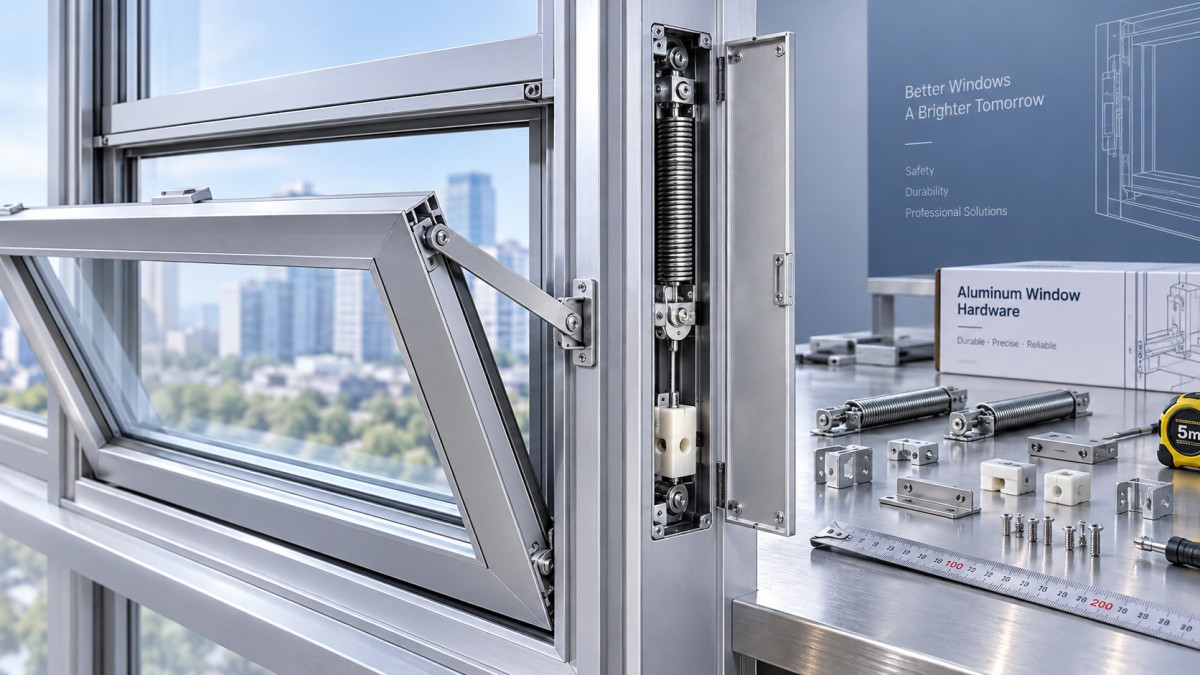
Coil systems use flat spring strips, often within carriers connected to pivot shoes. Depending on the design, each side may contain multiple coils. Check for cracked carriers, broken strips, damaged shoes, and loose mounting points. Record every coil marking and its installed arrangement; similar-looking carriers may hold different spring capacities.
Photographs should show the complete assembly, its frame connection, and its sash connection—not just the spring. A ruler alongside an unloaded, safely removed component helps establish scale.
Trace the connection from sash to frame
On a tilt-in window, a working balance cannot support the sash if its pivot bar is outside the shoe, broken, or incorrectly seated. Inspect both pivot bars for deformation and secure attachment. Examine the shoes for cracked bodies, damaged cams, and abnormal wear. A locked shoe is not automatically defective; its locking action may be part of the tilt mechanism.
If disengagement is suspected, establish why it occurred. A loose pivot bar, worn shoe, incorrectly seated sash, or distorted jamb can allow the connection to fail again. Simply re-engaging the components may restore movement temporarily without making the window reliable.
For non-tilt designs, inspect sash guides, balance end fittings, and the contact points that transfer spring force into the sash. Also check the frame anchors. A loose or damaged anchor can interrupt support even when the spring assembly appears intact.
Then examine the tracks. Debris, bent aluminum, displaced seals, and projecting screws can create drag. Excessive friction may hold a sash temporarily and mask a failed balance; once the obstruction is removed, the sash may fall. Maintain support throughout cleaning and inspection. Use only manufacturer-approved lubricants where specified, rather than spraying the entire track to disguise resistance.
Build a replacement specification that suppliers can verify
The replacement specification should combine component identification with the sash's actual load. A stamp on a channel or coil is useful, but its meaning depends on the balance family and supplier's coding system. Do not assume it directly states sash weight, or that another manufacturer's identical-looking code means the same thing.
When safely removed, weigh the complete sash, including glass and attached hardware, using a suitable scale. Larger or heavier glazing can change the required balance capacity without changing the outside sash dimensions. If removal is impractical, seek the original sash specification and confirm whether the glazing or hardware has since changed.
- Window identification, tilt or non-tilt operation, and affected sash.
- Balance type, readable markings, and photographs of both sides.
- Housing or channel dimensions measured using the supplier's stated method.
- End fittings, anchor details, shoe dimensions, and pivot-bar geometry where applicable.
- Complete sash weight, required travel, and any known glazing changes.
Confirm whether a stated capacity applies to one balance, a matched pair, or an assembled coil system. Dividing sash weight by two without checking that convention can lead to the wrong order. Where multiple coils are used, have the supplier verify the complete configuration rather than selecting individual springs independently.
Replacing both balances on the affected sash is often sensible when they are the same age and one has failed, subject to the manufacturer's guidance. Inspect both sides regardless. A new balance paired with a worn or incorrectly rated one can produce uneven movement. Do not substitute stronger springs to overcome track drag; correct the drag first.
Keep related aluminum products separate from balance compatibility
A mixed-property maintenance inventory may include sliding screens, inward-tilting units, gates, and double-hung windows. Their shared aluminum construction does not make their operating hardware interchangeable. For example, the hotel-oriented LX-1035 listing, Retractable gate, describes thermal-break aluminum profiles, 304 mesh, and EPDM or silicone sealing options. Those details concern the listed assembly; they do not establish compatibility with double-hung sash balances.
Aluminum Art manufactures cast aluminum doors, copper-aluminum doors, courtyard doors, guardrails, stair handrails, and accessories, with logistics access through its building-materials trading location. For service work involving a broad product range, accurate identification matters more than catalog resemblance. Its emphasis on quality and service is best supported by a clear parts record: model, dimensions, interface details, and photographs supplied before replacement hardware is dispatched.
Verify the repair before returning the window to use
After installation under the applicable service procedure, operate the repaired sash through its intended travel while keeping control of it. Check holding behavior at several permitted opening positions. It should not drift down, rise unexpectedly, or rack sideways. Opening and closing effort should remain reasonably consistent without abrupt catches.
Verify tilt operation where provided, then confirm both pivot connections are correctly seated when the sash returns upright. Check meeting-rail alignment, lock engagement, weatherstrip seating, and clearance from the other sash. A window that holds open but no longer closes or locks properly has not passed the repair check.
Record the installed part numbers, capacity information, sash weight if measured, and final observations. If holding remains unreliable, keep the window out of service and revisit the load path rather than adding friction or extra spring tension. The next step should be a verified correction to the balance specification, attachment, or track—not another part chosen by appearance.
Related Posts
CONTACT US

First class quality service and professional after-sales team.
Get in Touch
*We respect your confidentiality and all information are protected.