Choosing an aluminum windows exporter for an overseas project requires more than comparing quotations. Procurement teams must verify technical suitability, compliance evidence, production capacity, and delivery commitments.
Inconsistent specifications, missing compliance documents, and unreliable delivery schedules can turn an attractive offer into costly delays. The lowest quotation rarely reveals the full procurement risk.
A thorough supplier assessment should verify manufacturing capabilities, destination-market requirements, quality controls, packaging standards, and export logistics before an order is placed or a deposit paid.
This guide explains which documents to request, what questions to ask, and how to evaluate project readiness—helping you reduce sourcing risks and make confident purchasing decisions.
What Evidence Should You Request Before Shortlisting an Exporter?
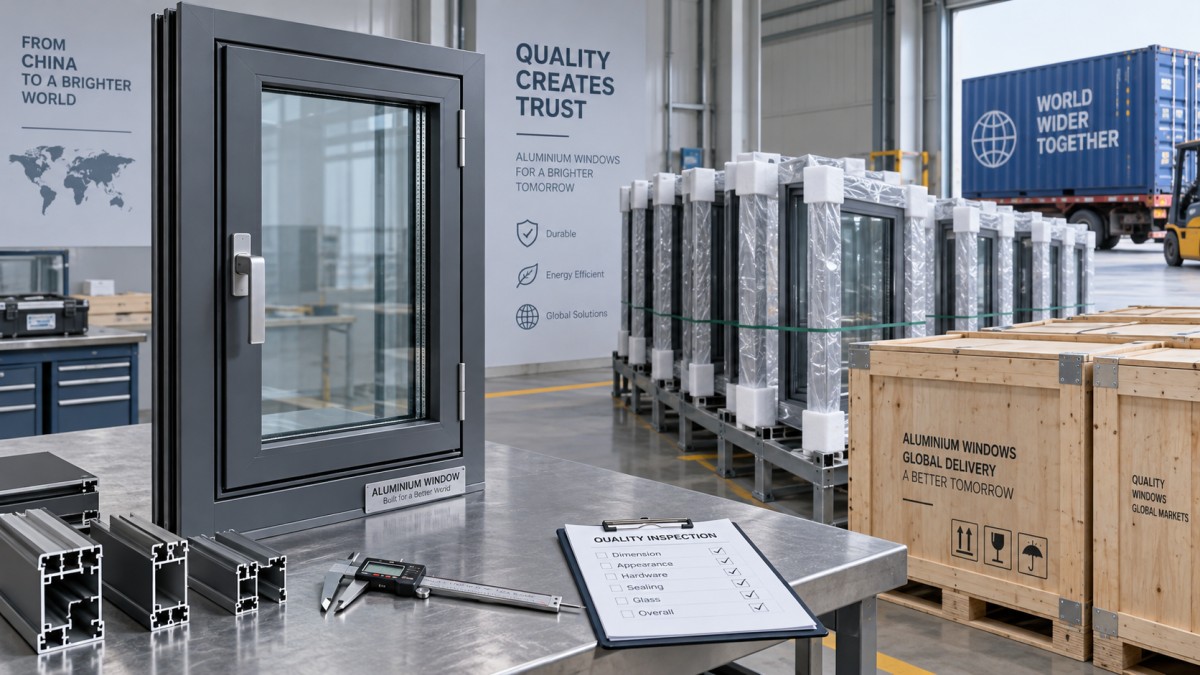
Start with three questions: Can the supplier manufacture your specified window system, demonstrate its required performance, and deliver traceable units within your project’s installation schedule?
Request a legal business identity, factory address, proposed window specifications, relevant test reports, production schedule, quality inspection plan, and examples of comparable completed export orders.
Ask for a sample window schedule showing opening types, dimensions, glazing, finishes, hardware, quantities, and identification codes. This reveals how accurately the supplier interprets project information.
Previous export experience helps, but shipping history alone does not establish technical competence. Seek projects with similar building exposure, window sizes, regulatory requirements, and installation conditions.
Use the following evidence matrix to compare candidates consistently. Treat missing critical documents as unresolved qualification gaps, even when pricing and sales communication appear attractive.
Does the Supplier Actually Make the Windows You Need?
Establish whether your commercial contact owns the factory, represents another manufacturer, or coordinates several subcontractors. Each arrangement can work if responsibilities and production locations remain transparent.
Request a live factory walkthrough covering profile storage, cutting, machining, assembly, glazing, inspection, and packing. For substantial orders, commission an independent audit of the actual facility.
Check which processes occur internally and which are outsourced. Extrusion, surface treatment, glass processing, and final assembly may involve different companies with separate quality controls.
Ask who approves those suppliers, verifies incoming materials, and authorizes substitutions. Your contract should identify critical components and require written approval before any agreed specification changes.
Aluminum Art describes manufacturing experience in cast aluminum doors, courtyard doors, guardrails, stair handrails, and accessories. Buyers should separately verify its capabilities for the proposed window system.
Related metalworking experience provides useful context, but window performance requires system-specific engineering and production controls. Confirm suitable equipment, trained assemblers, and documented experience before approving supply.
Will the Quoted Window System Meet Your Project Specifications?
Issue a coordinated request for quotation using architectural drawings and a window schedule. Define opening direction, frame dimensions, quantities, installation interfaces, and required performance for each type.
Specify whether dimensions refer to structural openings, finished openings, or manufactured frame sizes. Agree measurement responsibilities and tolerances before fabrication to prevent expensive site modifications.
For profiles, request alloy and temper, section drawings, wall thickness, and reinforcement details where relevant. Assess suitability against engineering requirements rather than treating thickness as the sole quality indicator.
For glazing, identify pane thicknesses, safety treatment, coatings, spacer construction, cavity width, and gas fill when specified. Confirm the exact build-up associated with submitted performance evidence.
For hardware, request manufacturer, model, load capacity, corrosion suitability, and replacement availability. Large operable sashes need appropriately rated hinges, locks, and stays rather than generic accessories.
Define coating requirements through the applicable project specification, including preparation, finish type, thickness, color, gloss, and exposure suitability. Approve physical samples because screen colors vary.
Require a complete sample unit for high-value or technically demanding projects. Review operation, sealing, drainage, appearance, dimensions, and installation interfaces before authorizing full production release.
Do the Compliance Documents Cover the Supplied Configuration?
Determine destination requirements with the project consultant, local authority, or qualified specialist before comparing suppliers. Building use, height, exposure, and jurisdiction can change the required evidence.
A supplier’s statement that windows meet “international standards” is insufficient. Request the specific standards, performance classifications, test reports, and market documentation applicable to your project.
Depending on the destination, relevant documents may include European declarations and CE marking information, North American performance certification, or evidence addressing Australian window and glazing requirements.
Verify the report issuer, laboratory accreditation scope, report number, date, and tested specimen details. Where necessary, confirm authenticity directly with the laboratory or certification body.
Compare the tested window’s opening type, dimensions, profiles, glazing, seals, and hardware with the proposed supply. Differences may require technical assessment or additional testing before acceptance.
Focus on project-relevant results: air permeability, water penetration, structural resistance, thermal performance, and acoustic performance. Read classifications and test conditions instead of relying on headline ratings.
Ask whether thermal values describe the complete window or only the glass. A glazing value cannot establish frame performance or represent every size in your schedule.
Make accepted compliance evidence a contract attachment. If documentation remains unresolved, keep the supplier under conditional review and withhold production release until requirements are satisfied.
How Will Quality Be Controlled Across the Entire Order?
An approved sample establishes a reference, but consistent production needs written controls. Request inspection stages, measurement methods, acceptance criteria, responsible personnel, and records retained for each batch.
Incoming checks should verify profiles, finishes, glass markings, seals, and hardware against approved specifications. Require traceability sufficient to investigate a defect without treating every unit as suspect.
During assembly, inspect dimensions, joints, drainage paths, gasket continuity, glazing support, and hardware operation. Define tolerances and defect categories so acceptance does not depend on personal judgment.
Agree first-article inspection before repetitive production, particularly for unusual sizes or new systems. Resolving an assembly problem early costs less than correcting an entire completed shipment.
For independent inspections, define sampling rules and critical defects in advance. Sampled inspections cannot guarantee every unit, so contractual obligations should still apply to all supplied windows.
Specify how failed inspections trigger correction, reinspection, and shipment authorization. Assign associated costs contractually, and require documented approval before dispatching units with any accepted deviations.
Can the Exporter Protect Your Installation Schedule and Cargo?
Request a milestone schedule separating drawing approval, material procurement, fabrication, inspection, packing, booking, and departure. A single promised shipping date conceals dependencies that procurement teams need to manage.
Check available capacity against existing orders and your production window. Ask which materials have the longest lead times and how shortages would affect agreed delivery milestones.
Build approval deadlines into your own schedule. Delayed drawings, finish decisions, or site measurements can invalidate lead times even when the exporter has sufficient manufacturing capacity.
Request a packing proposal showing frame protection, glass support, restraints, moisture management, and crate construction. Packaging should account for actual transport and handling conditions throughout the route.
Labels should identify project, floor, opening reference, unit dimensions, and handling orientation. Matching packing lists help site teams locate windows without repeatedly opening and moving crates.
Confirm container loading plans, shipment weights, unloading requirements, and any applicable treatment or marking rules for timber packaging. Obtain packing photographs and inspection records before departure.
State the agreed Incoterms rule and named place in the contract. Clarify freight, insurance, customs clearance, duties, terminal charges, and inland delivery responsibilities with your logistics provider.
How Should You Evaluate Associated Exterior Products?
Projects sometimes combine window procurement with facade or decorative panel orders. Evaluate each product separately, then check connections, moisture details, movement allowances, and installation sequencing together.
For associated cladding, Carved panel4 is described as combining color coated steel, special fireproof rigid polyurethane foam, and an aluminum foil anti-corrosion layer for insulation applications.
Listed options include 16, 20, and 25 mm thicknesses at 383 mm width, plus a 14 mm option at 435 mm width; lengths are customizable.
Confirm the exact configuration and supporting evidence for claimed thermal insulation, sound insulation, moisture resistance, and anti-fouling performance. Do not apply these claims to window assemblies.
The stated B1 fire rating requires verification against its referenced classification standard and tested configuration. Confirm destination acceptance, especially where facade systems face additional fire restrictions.
Which Commercial Terms Make the Supplier’s Commitments Enforceable?
Compare quotations using identical specifications and delivery assumptions. Include testing, packaging, freight, duties, inspection, spare components, and likely handling costs to estimate the total landed cost.
Check exclusions carefully: installation materials, anchors, sealants, shop drawings, engineering review, and site assistance may be priced separately. An incomplete quotation can appear cheaper than complete supply.
Tie payment milestones to verifiable events such as approved drawings, completed production, and accepted inspection. Choose payment instruments according to supplier history, order value, and available banking arrangements.
Define warranty coverage, claim evidence, response times, remedies, and transport costs for replacement parts. Distinguish component warranties from obligations covering assembly defects and incorrect supplied dimensions.
Agree spare hardware and replacement procedures before ordering. Overseas replacements can delay handover, particularly when custom glass or proprietary components require another manufacturing and shipping cycle.
Make the Final Decision Using Evidence and Unresolved Risks
Score shortlisted exporters on technical fit, verified compliance, quality controls, production capacity, logistics readiness, and commercial clarity. Set weighting according to your project’s most consequential risks.
Use mandatory acceptance gates for essential requirements. A low price or strong sales response should not compensate for missing compliance evidence, unsuitable engineering, or unverifiable manufacturing arrangements.
Where uncertainty remains, use a pilot order or hold production pending specific evidence. Record outstanding actions, responsible parties, and deadlines so conditional approval cannot become accidental acceptance.
The right aluminum windows exporter can translate drawings into compliant, traceable products and support delivery through documented controls. Choose the supplier whose evidence supports those commitments.