An aluminum guardrail submittal should connect applicable load requirements to the exact proposed assembly, supported by traceable test evidence, connection details, and installation instructions.
For quality control and safety teams, missing test details, unclear anchorage specifications, or mismatched installation conditions can delay approval and leave critical questions unresolved.
The central review question is straightforward: does the submitted evidence support the guardrail configuration, mounting conditions, and intended use shown on the project drawings?
This guide explains what reviewers should request, how to identify unsupported substitutions, and which documentation helps turn a product submission into a defensible approval decision.
What Evidence Makes an Aluminum Guardrail Submittal Reviewable?
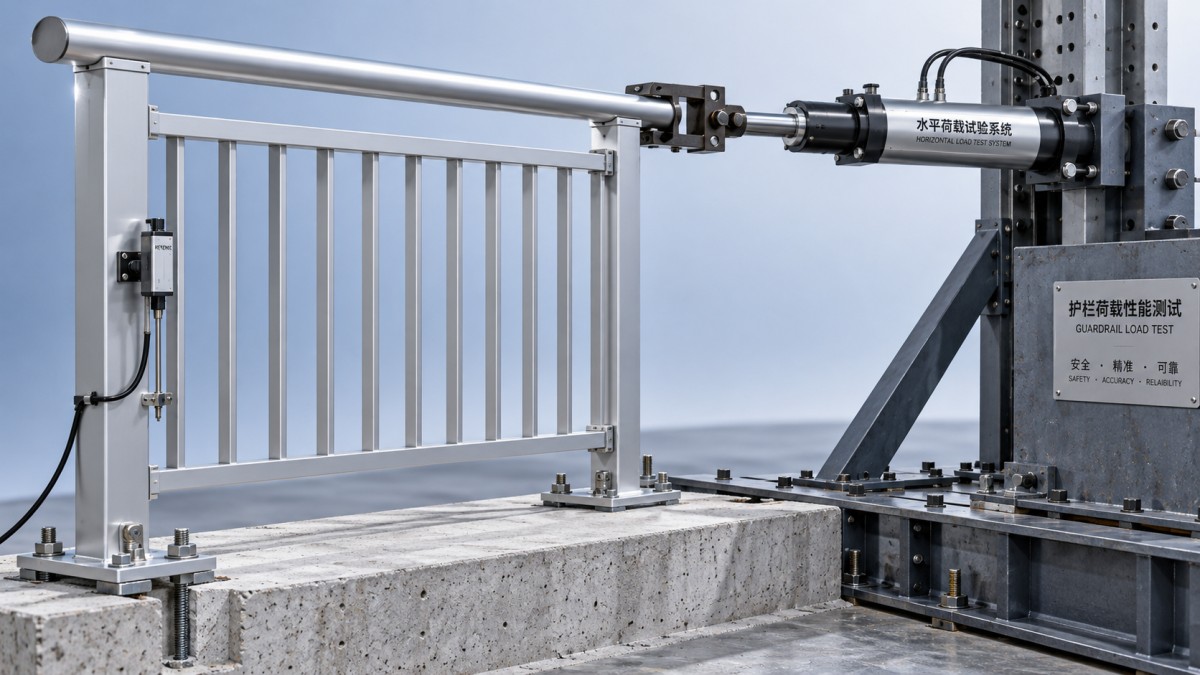
A useful submission establishes three connections: the governing requirement, the tested or calculated assembly, and the configuration that contractors will actually install on site.
A brochure may identify appearance and available finishes, but it rarely establishes structural adequacy. Reviewers need evidence addressing posts, rails, infill, connections, and supporting construction.
Begin with a document index and compliance matrix. Each requirement should point to a report page, drawing detail, calculation, or installation instruction supporting the proposed configuration.
The matrix should also identify limitations. Unresolved conditions deserve explicit engineering review instead of being hidden behind general statements that the product meets building codes.
Use the following checklist to screen completeness before detailed technical review. Missing items do not automatically establish failure, but they prevent a reliable approval decision.
Which Load Requirements Actually Apply to This Project?
Identify the governing jurisdiction before selecting load values. A residential balcony, commercial stair, industrial platform, and exterior fence can fall under different requirements and exceptions.
For many projects using the International Building Code, common guard criteria include a 200-pound concentrated load and a 50-pound-per-linear-foot load at the top.
These commonly cited loads act in directions specified by the governing provisions and generally need not act simultaneously. Verify the adopted edition and applicable exceptions.
Infill provisions commonly include a 50-pound horizontal load applied over an area of one square foot. Confirm the exact language for the proposed assembly.
Do not interchange building guard requirements with OSHA workplace provisions. Where both frameworks may apply, the responsible designer should identify the controlling obligations and document compliance.
Exterior installations may also require evaluation for wind, particularly with solid panels. Project conditions can introduce additional demands beyond the commonly quoted guard loads.
Include serviceability criteria where specified, such as allowable deflection or residual movement. Strength compliance alone may not resolve concerns about excessive flexibility or occupant confidence.
Does the Tested Assembly Match the Proposed Installation?
The report should identify the specimen clearly enough to reconstruct it. Request drawings, photographs, member dimensions, guard height, post spacing, and attachment details together.
Longer post spacing can increase rail bending and connection demand. Taller guards can increase overturning effects at the base, even when the applied force remains unchanged.
Document aluminum alloy and temper rather than accepting “aluminum” as a complete material specification. Extruded and cast components can have different properties and failure behavior.
For welded assemblies, calculations should account for welding effects where relevant. Base material strength does not automatically describe the capacity of the completed welded connection.
Infill changes also matter. Replacing pickets with decorative cast panels, glass, or solid sections can alter load transfer, attachment demands, and exposure to wind pressure.
A report covering one configuration should not be assumed to cover every option in a catalog. Require documented justification for differences affecting structural performance.
That justification may involve calculations, additional testing, or a defined product evaluation scope. The responsible design professional should establish whether the proposed variation is adequately supported.
What Should the Load Test Report Actually Show?
A test report should state the testing organization, report number, test date, specimen identification, and test method. It should also identify deviations from the stated procedure.
ASTM E935 is a recognized test method for permanent metal railing systems and rails. Reference the applicable edition and explain how testing addresses project requirements.
A test method describes procedures; it does not independently establish every required load or acceptance limit. The submission must identify the separate basis for acceptance.
Request the load application point, direction, contact arrangement, loading sequence, and duration. These details determine whether the test meaningfully represents the required loading condition.
The report should describe the fixture and support conditions. A specimen secured to a rigid laboratory frame may provide limited evidence about the proposed field anchorage.
Measured results should include applied loads and relevant displacement readings, with observations of cracking, connection slip, permanent deformation, or failure where those conditions occurred.
Where qualification loads exceed design loads, explain the relationship and acceptance basis. Reviewers should not infer allowable capacity by applying an arbitrary factor to failure results.
Check laboratory competence and any required accreditation scope. Accreditation can support confidence in testing, but reviewers still need to confirm the report covers the submitted system.
Why Anchorage Deserves Its Own Review
An aluminum guardrail can have adequate members and still perform poorly because its anchors, base plates, or supporting substrate cannot transfer the required forces.
The submittal should show base plate dimensions, thickness, hole locations, welds, anchor specifications, and the connection between the post and its mounting component clearly.
For concrete installations, document concrete strength, slab thickness, embedment, edge distances, anchor spacing, and cracked-concrete suitability where required. Match these conditions to the anchor design.
Concrete breakout, pullout, steel failure, and combined loading may govern anchorage. A generic anchor data sheet cannot replace evaluation of the actual connection geometry.
For wood or steel supports, identify member sizes, grades, fastening details, and necessary reinforcement. Drawings should show how forces enter the supporting structure safely.
Do not treat a masonry veneer, thin topping, or waterproofing layer as structural backing without justification. The anchorage detail must identify the actual load-bearing substrate.
Where the laboratory used a different substrate, provide separate anchorage calculations or representative testing. Explicitly distinguish evidence for the railing assembly from evidence for its foundation.
How Should Product Information Be Used Without Overstating Compliance?
Product descriptions help reviewers identify the proposed system, but marketing attributes should remain separate from verified structural properties, approved applications, and documented limitations of use.
For example, Aluminum Art’s Aluminum alloy fence, model LX-1079, is described as an aluminum product for modern homes, emphasizing durability, style, and performance.
If proposed as fall protection, this model would still require evidence supporting the specified guard height, spacing, connections, anchorage, and applicable project loading conditions.
A fence designation alone does not establish suitability as a building guard. Reviewers should confirm intended use and obtain documentation for the exact proposed application.
Any energy-efficiency claim needs a defined basis and relevant evidence. It does not demonstrate load resistance, and its relevance to an open guardrail requires explanation.
Manufacturing capability and convenient logistics can support procurement planning. Structural approval should rest on the submitted technical evidence and its match to the installed assembly.
Which Installation Records Help Preserve the Approved Performance?
Approval should produce an identifiable installation baseline: coordinated drawings, current manufacturer instructions, specified components, and clear limitations that installers and inspectors can access on site.
Inspection points should cover substrate verification, anchor placement, embedment, fastening procedures, post spacing, and completion of specified connections. Record results before concealed work becomes inaccessible.
For adhesive anchors, document the required hole preparation, installation conditions, and curing procedures. Follow the approved anchor instructions and any applicable special inspection requirements.
For mechanical anchors and bolted connections, follow specified tightening procedures. Applying an arbitrary torque can damage components or fail to establish the intended connection condition.
Address dissimilar-metal contact and exterior exposure through specified isolation, compatible fasteners, and protective details. Corrosion protection supports durability but does not substitute for capacity verification.
Field changes should trigger review when they affect structural assumptions. Examples include relocated posts, reduced edge distances, substituted anchors, altered welds, or a changed substrate.
How Can Reviewers Resolve Gaps Without Delaying the Entire Package?
Classify deficiencies by their effect on the approval decision. Missing structural evidence deserves priority over presentation issues because it can change whether installation is acceptable.
Write review comments around specific mismatches. “Provide calculations for anchors near the slab edge” is more actionable than requesting a general certificate of compliance.
Assign each unresolved item to the party responsible for supplying evidence or making the design decision. Track revisions so superseded details cannot remain in circulation.
Field proof testing may be appropriate when specified by the engineer or contract documents. Define the procedure, acceptance criteria, sampling, and response to unsuccessful results beforehand.
Do not improvise site loading or assume one successful test validates every installed guard. Field testing has limitations and should answer a clearly defined technical question.
Close the review with an approved configuration register and outstanding-condition log. This gives quality control personnel a practical reference for receiving inspections and installation checks.
Approve the Evidence That Supports the Installed Guardrail
A complete aluminum guardrail submittal makes a traceable case: applicable requirements are identified, the assembly is defined, and testing or calculations support its proposed use.
The most consequential review issues usually involve configuration differences, incomplete test reporting, and unsupported anchorage assumptions. Resolve these before relying on general product compliance statements.
For safety and quality teams, the strongest approval decision connects documented capacity to actual site conditions, then preserves those assumptions through installation records and controlled revisions.
When that connection is clear, reviewers can assess the proposed guardrail confidently. When evidence is missing, request the specific documentation needed to close the gap.