


Aluminum Storm Doors: Full-View Glass or Ventilating Panels?
Aluminum Storm Doors: Full-View Glass or Ventilating Panels?
Choosing between full-view glass and ventilating panels for aluminum storm doors comes down to how you want your entryway to look and feel. Full-view glass showcases your main door and welcomes natural light, while ventilating designs let fresh air circulate through a screen when conditions allow. The right choice also depends on local weather, cleaning needs, security features, and everyday convenience.
There is one useful complication: these categories overlap. Some full-view doors accept a removable screen, while others incorporate retractable screens. Before comparing prices, establish whether you are choosing a permanently glazed door, a seasonal glass-and-screen system, or a door that switches between glass and ventilation without removing a panel.
Start with how the entrance actually gets used
A storm door is a secondary exterior door installed outside the main entry door. Depending on its construction and fit, it can help shield that door from weather, admit daylight when the main door is open, and provide screened ventilation. It does not replace a properly sealed entry door, and its name does not automatically mean it is approved for hurricane exposure.
Picture an ordinary afternoon rather than a showroom display. If your main door stays closed because of road noise, privacy, or air conditioning, a ventilating panel may see little use. A full-view design can still make sense because it leaves the entry door visible from outside.
If you regularly leave the main door open during mild weather, ventilation becomes more valuable. That is especially true when another screened opening elsewhere in the home creates an airflow path. One open doorway alone may provide limited air movement; the screen area and surrounding wind conditions matter.
Full-view glass: a cleaner appearance, with practical compromises
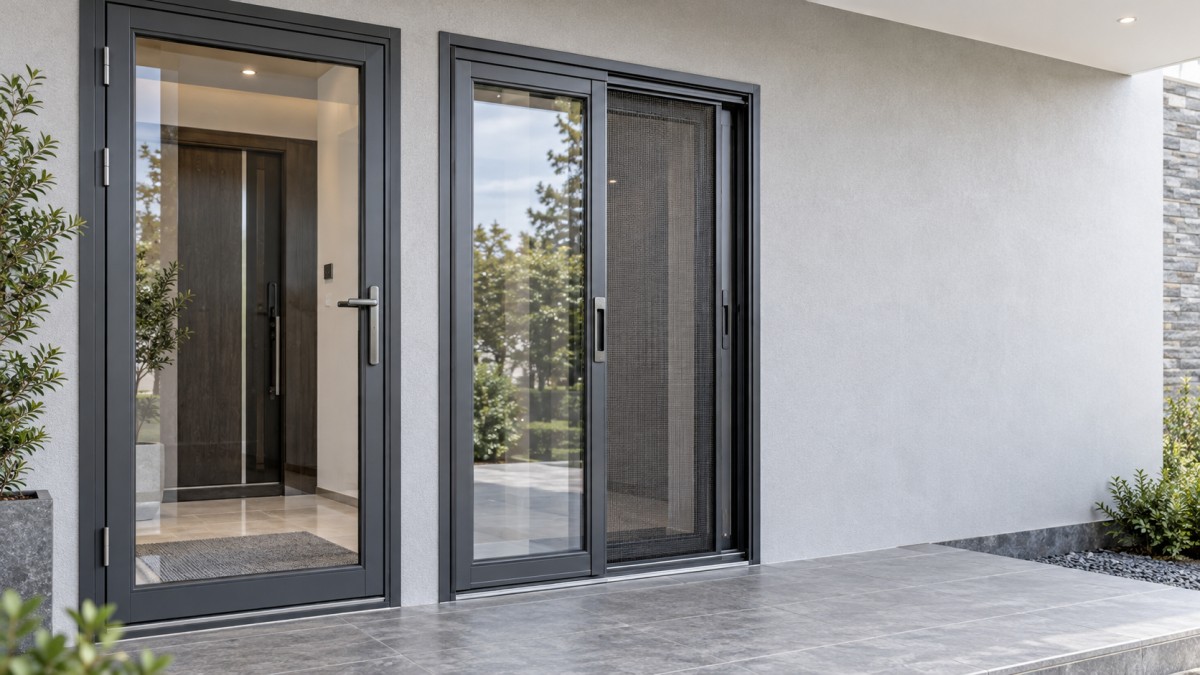
Full-view aluminum storm doors use a large glazed area with relatively little visual interruption. They suit entrances where the main door is part of the architecture: decorative panels, distinctive paint, or carefully selected hardware remain visible. When the main door is open, the large glass area also admits daylight into the hall.
The trade-off is visibility in both directions. Clear glass offers little privacy with the main door open, particularly after dark when interior lighting makes the hallway easier to see. Obscure glass can help, but it changes the view of the primary door and should be assessed using an actual sample.
Large glass panels show fingerprints, pet nose marks, and rain spotting. They may also be awkward to handle if seasonal ventilation requires replacing the glass insert with a screen. Ask how the insert releases, whether tools are necessary, and where the unused panel will be stored safely.
Look beyond the phrase “full-view.” Confirm the glazing type, panel retention method, and applicable safety-glazing requirements. Tempered safety glass and laminated glass behave differently when broken; neither should be treated as proof that the complete door is a security or impact-rated assembly.
Ventilating panels: convenient airflow, more parts to maintain
Ventilating storm doors typically use movable glass sections to expose a screen. Some have a fixed screen area; others deploy a retractable screen as the glass moves. The advantage is straightforward: you can adjust ventilation without carrying a large glass insert through the house.
The layout deserves attention. A high ventilation opening keeps ordinary screen mesh farther from pets and small children, while a lower opening may better suit a particular airflow preference. Neither layout makes a screen a protective barrier. Insect screens are not designed to prevent falls or resist forced entry.
Sliding tracks, latches, screen rollers, and seals add maintenance points. Try the mechanism before ordering if possible. It should move smoothly, remain securely positioned, and be manageable for the people who will use it. A clever mechanism that needs two strong hands is not necessarily convenient.
Compare the actual exposed screen opening rather than the overall door size. Crossbars and overlapping glass can substantially change the usable ventilation area. Also ask whether the screen cartridge or mesh can be replaced separately if it tears.
Weather can change which option makes sense
A sunny entrance needs a different assessment from a shaded porch. Strong sunlight passing through storm-door glass can create heat buildup between the two doors. Dark entry-door finishes and certain door materials may be particularly sensitive. Check the primary door manufacturer’s instructions and warranty conditions before adding a storm door; do not assume a ventilating panel resolves the issue unless it is actually open.
In cold weather, a well-fitted secondary door may reduce direct wind exposure, but the benefit depends on seals, glazing, frame construction, and the existing entrance. Aluminum conducts heat readily, so frame material alone tells you little about insulation. Condensation between the doors is a reason to investigate moisture and temperature conditions, not simply add more sealant.
For exposed entrances, ask how the assembly handles wind-driven rain and how water drains from the frame. Keep drainage paths clear. In coastal settings, finish quality, hardware compatibility, and maintenance instructions deserve particular attention: aluminum does not develop red rust like steel, but it can still corrode.
Where hurricane or impact protection is required, request documentation for the exact door assembly, dimensions, glazing, anchoring, and installation conditions. A robust-looking frame or a “storm” label is not enough. Local requirements should determine what evidence is acceptable.
The fit and hardware may matter more than the panel style
A good-looking door becomes frustrating quickly if its handle strikes the entry-door handle or its closer pulls against an uneven frame. Measure the mounting opening at several points, check that it is reasonably square, and confirm the available mounting surface. Follow the selected manufacturer’s measurement method rather than ordering from the nominal size of the main door.
Before approving an order, resolve these details:
- Swing and clearance: Check steps, porch posts, railings, and clearance between both sets of handles.
- Closer operation: Confirm where it mounts, how it adjusts, and whether hold-open operation suits daily use.
- Bottom seal: Establish how the sweep meets the sill without dragging or leaving a visible gap.
- Replacement parts: Ask about availability of glazing inserts, screen assemblies, latches, and closers.
- Locking expectations: Distinguish a convenience latch from tested security performance.
Wind can catch an outward-opening door and load its hinges, closer, and mounting screws. Installation into sound backing is essential. Loose trim, deteriorated wood, or unsuitable masonry fixings should be addressed before fitting the new assembly.
For households with limited grip strength or mobility, operating effort deserves as much attention as appearance. Test the latch, panel movement, and door closer together. An excessively strong closing action can make a frequently used entrance uncomfortable.
Compare the installed cost, not just the door price
There is no dependable rule that full-view glass always costs more—or less—than a ventilating design. Glazing specification, frame construction, retractable-screen hardware, finish, custom sizing, and installation work all affect the quotation. A lower purchase price can become less attractive if frame repairs or missing hardware appear later.
Ask for a scope that separates the door, installation, opening repairs, disposal, and optional components. For delivered products, clarify packaging, damage inspection, lead time, and responsibility for incorrect measurements. Large glass inserts need careful handling whether the supplier is nearby or shipping through a wider logistics network.
Aluminum Art manufactures architectural products including cast aluminum doors, copper-aluminum doors, courtyard doors, guardrails, stair handrails, and accessories, with access to a building-materials and logistics hub. For a coordinated entrance project, that range makes finish matching and component compatibility relevant questions. It does not establish a particular storm-door specification; request drawings and written details for the proposed assembly.
Consider the surrounding outdoor space without confusing product roles
An entrance beside a deck or terrace may form part of a larger outdoor renovation. Aluminum finishes can be coordinated across doors, railings, and shade structures. One separate option is the Honolulu Tropical Aluminum Pergola Smart Electric Louver Hurricane Resistant Beachfront Gazebo, model GFR-10, described with a customizable 6063-T6 aluminum frame, powder-coat or PVDF finishes, electric louvers, and optional lighting and side screens.
That pergola serves a different purpose from a storm door. Its product title should not be taken as evidence of suitability for a particular hurricane exposure; structural performance, anchoring, and site requirements need verification. A nearby shade structure may change sun exposure, but it does not replace checking the entry door’s storm-door compatibility.
Choose the design you will use, not the feature list
Choose full-view glass when showcasing the main door and keeping the entrance visually open are your priorities. If you only want occasional airflow, a removable-screen option may be sufficient—provided changing and storing the insert is realistic.
Choose a ventilating design when screened fresh air is part of your routine and you want quick adjustment without seasonal panel changes. Accept the extra moving parts, and prioritize accessible cleaning and replaceable screen components.
Before committing, confirm three things in writing: compatibility with your existing entry door, the exact glass-and-screen configuration, and the installed scope. Those details will influence daily satisfaction more than a broad style label.
Related Posts
CONTACT US

First class quality service and professional after-sales team.
Get in Touch
*We respect your confidentiality and all information are protected.