


Is an Aluminum Pergola Cost-Effective Compared With a Timber Pergola?
Is an aluminum pergola cost-effective compared with a timber pergola? The answer depends on more than the initial purchase price. Installation, maintenance, durability and eventual replacement all influence the long-term cost of an outdoor structure. The better choice is the one that fits not just the project budget, but also the way the space will be used and maintained.
Start with comparable installed prices
A timber pergola can have a lower material cost, particularly when the design is simple and suitable local lumber is readily available. Aluminum may cost more upfront, especially when the specification includes an opening roof, integrated drainage, lighting or custom screens. But comparing a basic timber frame with a fully equipped aluminum system tells you little about value.
Ask suppliers to price the same footprint, clear height, roof coverage and finish. Then check what is included beyond the frame: foundations, anchors, delivery, lifting equipment, assembly, electrical work and site reinstatement can all change the final figure. A kit described as easy to assemble still needs a suitable base and competent installation.
Site access matters too. A hotel terrace reached through a finished building may be more expensive to work on than an open garden, regardless of the frame material. For a project involving doors, guardrails and a pergola, coordinating dimensions, finishes and delivery schedules early can also prevent costly changes at the interfaces.
What will it cost to keep the space open?
Maintenance is often the deciding factor for a commercial property. Timber may need periodic inspection, cleaning and refinishing; the frequency depends on the species, treatment, exposure and desired appearance. Outdoor furniture may have to be moved, and a restaurant or venue may need to close part of its seating area while work is carried out.
A powder-coated aluminum frame generally avoids routine staining or painting, but it is not maintenance-free. Cleaning, checking fasteners and inspecting damaged coating remain sensible. An opening-roof system may also have moving parts, seals and drainage channels that need attention. In poolside or coastal settings, ask the supplier about finish suitability, cleaning instructions and warranty exclusions rather than assuming every aluminum system performs equally well.
Timber is not automatically the expensive choice over time. If a property already has a maintenance team, a straightforward timber structure with accessible surfaces may be manageable. Conversely, an intricate design with hard-to-reach joints can turn an apparently modest refinishing job into a recurring operational headache.
Match the structure to the exposure
Aluminum does not rot, which makes it attractive where posts and beams are repeatedly exposed to moisture. Timber performance depends heavily on species, treatment, detailing and whether water can collect around joints or post bases. Good detailing matters with both materials: trapped water, incompatible fasteners and poor drainage can shorten service life even when the frame itself is sound.
Do not treat “waterproof pergola” as a complete specification. An opening roof may manage rain when closed, but buyers should confirm how water drains, whether gutters and downpipes are included, and what happens during wind-driven rain. If dry seating is essential, discuss the expected level of protection and the limits of the system before ordering.
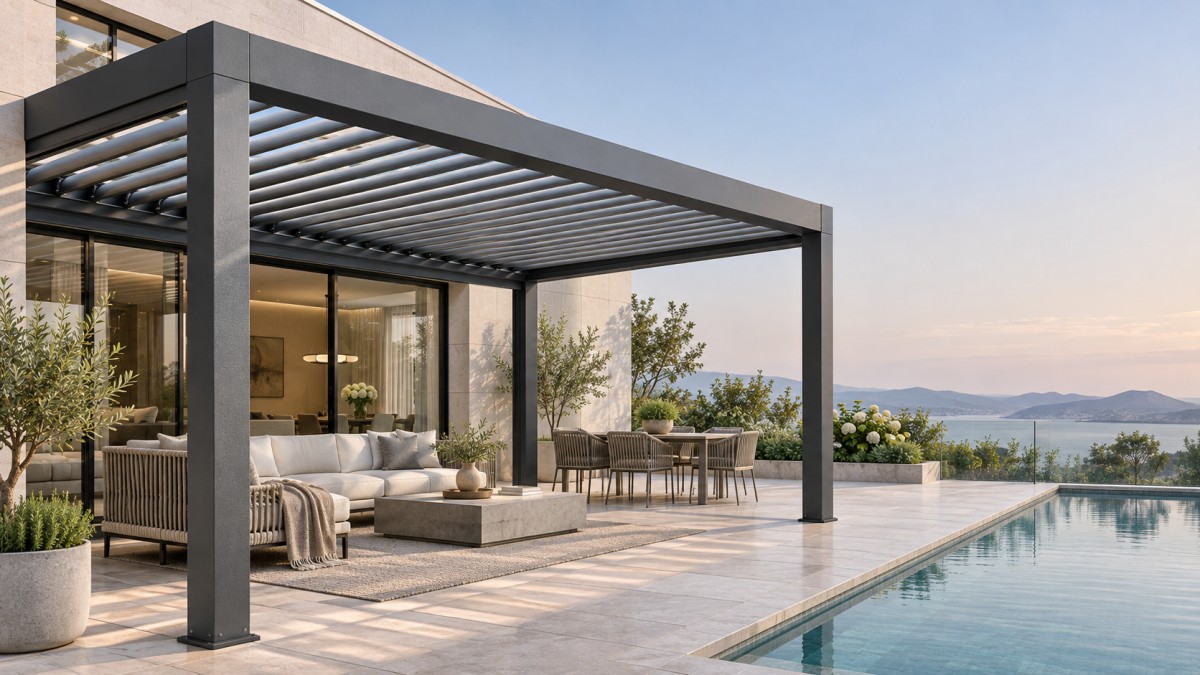
For example, the Dallas Poolside Aluminum Pergola Waterproof Aluminum Alloy Horizontal Opening Swimming Pool Shade is offered as model GFR-08 in 6063-T6 aluminum alloy, with custom sizing and options such as LED lighting and side screens. For a poolside or restaurant project, those options can affect both usability and price. Confirm the roof operation, drainage arrangement, finish and included accessories in the quotation; the product title alone is not a substitute for a project specification.
Build a realistic ownership comparison
To judge whether an aluminum pergola is cost-effective, choose a planning period that reflects the property’s intended use. Add the installed price to expected cleaning, inspection, refinishing, repairs and any likely replacement or disposal costs. Where downtime affects revenue, include a reasonable allowance for lost use of the space. Keep uncertain items visible rather than presenting an estimate as a guaranteed saving.
A useful quotation should also identify the frame finish, component availability and warranty terms. Aluminum Art’s background in exterior doors, guardrails, handrails and accessories is relevant when a project needs those elements coordinated visually; it is still worth confirming which pergola components, installation services and after-sales support are included in the proposed scope.
Before approving either material, request drawings showing post positions, connections and drainage, plus project-specific confirmation of structural requirements and applicable local approvals. If the timber option remains cheaper after realistic maintenance allowances, its appearance and repairability may justify it. If access is difficult or interruptions are costly, the higher initial price of aluminum may be easier to defend.
Related Posts
CONTACT US

First class quality service and professional after-sales team.
Get in Touch
*We respect your confidentiality and all information are protected.