


Aluminum Windows Cost: Budgeting for Installation, Freight, and Site Work
Aluminum windows cost becomes a useful budget figure only when it covers the installed opening: the window assembly, delivery, unloading, installation, perimeter sealing, and the work needed to leave surrounding surfaces complete. A low unit price loses its advantage when it excludes lifting equipment, damaged-opening repairs, or repeated visits caused by an unready site.
Start with a defined scope for each opening and a clear delivery point. Then separate confirmed prices from allowances for unresolved work. This makes competing quotations easier to compare and shows which decisions must be settled before the order becomes a reliable project budget.
Build the budget around a completed opening
A practical calculation is: total project cost = window supply + freight and delivery charges + unloading and storage + installation + opening preparation and finishing + applicable taxes and import charges + allowances for identified uncertainties. Keep each category visible. Combining everything into a single installed rate too early hides exclusions and makes later changes difficult to price.
The quantity basis also matters. A price per window is meaningful only when dimensions, opening types, glazing, and accessories are comparable. A price per square meter can obscure differences between a large fixed unit and several smaller operable units covering the same area. The smaller units introduce additional frames, hardware, perimeter joints, and installation operations.
Freeze the specification before comparing unit prices
Use a window schedule with an identifier for every opening. Record width, height, quantity, fixed or operable configuration, opening direction, glazing build-up, finish, and required accessories. Separate frame dimensions from structural opening dimensions so that fabrication allowances do not become accidental size discrepancies.
Profile thickness alone does not establish equivalent construction. Frame geometry, reinforcement where specified, thermal-break design, glazing support, and connection details affect the assembly. Likewise, a description such as “double glazing” leaves important questions unanswered about pane thicknesses, cavity construction, coatings, and safety-glass locations. Compare the complete specified assembly before treating a lower supply price as a saving.
Assembly condition changes where costs appear. Factory-glazed units arrive heavier and need handling arrangements suited to the complete assembly. Frames delivered for site glazing require additional glass handling, installation labor, protected storage, and coordination. Neither approach automatically produces the lower installed cost; access and installation sequence determine the difference.
Keep related products on separate schedule lines. If a hotel package also includes an Aluminum Electric Sliding Door, the supplied GFR-033 information lists thermal-break aluminum, optional fixed or sliding screens, and EPDM or silicone sealing materials. Confirm its operating configuration before pricing: the supplied information also mentions inward tilting. Electrical connections, controls, and commissioning need explicit scope confirmation rather than inclusion by assumption in a window installation rate.
Installation labor follows access and sequence
An installation quotation needs more detail than the number of windows. Floor level, external access, unit weight, fixing substrate, and the condition of the openings determine how the work proceeds. Ground-level openings beside a clear unloading area create a different labor requirement from upper-floor openings reached through occupied rooms.
Ask for the assumed installation method. Scaffolding, mobile platforms, cranes, and glass-handling equipment have different mobilization and availability costs. A crane allowance needs an agreed lifting position and suitable access; a quoted machine does not resolve an obstructed route or an unsuitable setup area.
Labor allowances should include setting frames square and level, installing specified fixings, placing glazing where applicable, completing perimeter joints, and adjusting operating hardware. A frame that fits into an opening still needs adequate support and correct fixing. Distorted frames can cause poor operation and uneven gasket contact, leading to return visits after surrounding finishes are complete.
Repeated mobilization is easy to overlook. When only part of a floor is ready, the same installation crew and equipment may need to return. Agree whether the quotation assumes one continuous operation or several phases. For phased work, identify the minimum ready area and the charge basis for additional visits.
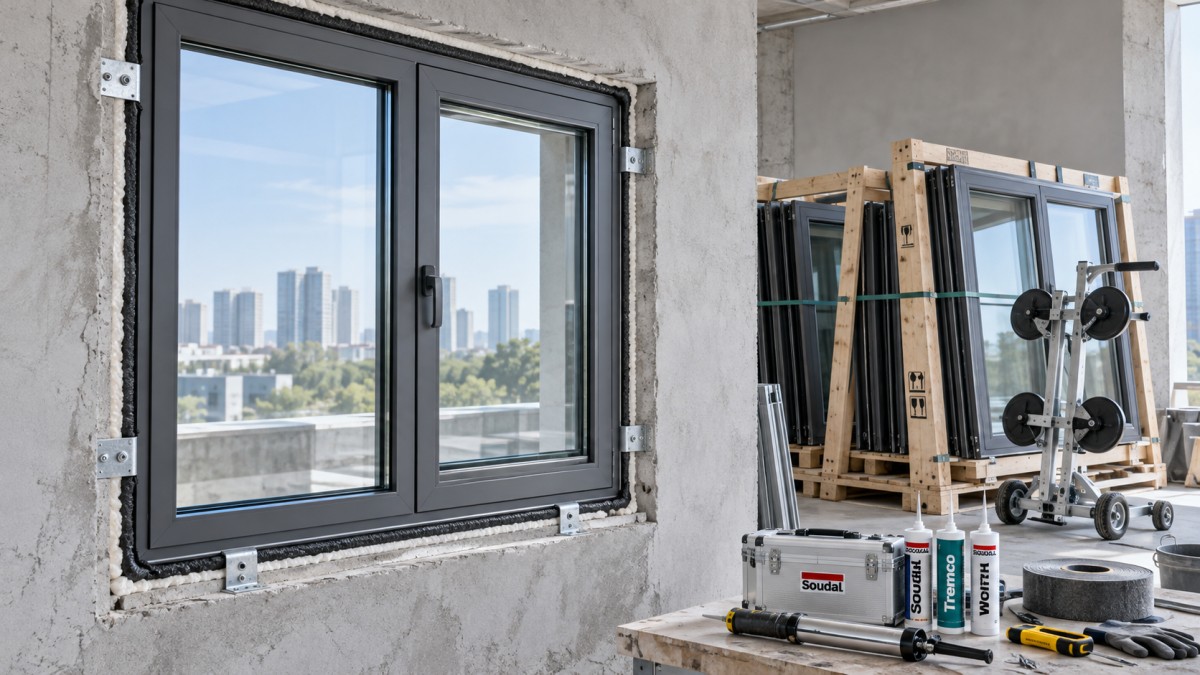
A marked-up site plan showing unloading, storage, internal movement, and lifting positions helps expose these costs before delivery. It also reveals whether a packaged unit can pass through the available route without unpacking or changing the installation sequence.
Freight must include the last movement to site
Request a packing list with package dimensions, gross weights, quantities, and handling requirements. Freight pricing follows the packed shipment, not simply the finished window area. Protective crates and racks occupy space, and large units can restrict vehicle selection or loading arrangements even when the total shipment weight is modest.
Define the delivery endpoint precisely. Delivery to a port, warehouse, site entrance, or unloading position represents different scopes. Where an international trade term applies, record its named place and version, then identify the remaining transport, import formalities, charges, and unloading responsibilities. The term alone does not describe the site's receiving arrangements.
Unloading deserves its own budget line whenever the receiving site supplies the equipment. Confirm suitable lifting points, required machine capacity for the planned lift, vehicle access, and space to place the load safely. Tail-lift delivery is only useful when the package size, weight, and ground conditions suit that method.
Storage creates a separate exposure. Early delivery requires a secure area, protection appropriate to the product, and supports that prevent distortion or damage. Rehandling adds labor and increases opportunities for scratched finishes or broken glass. Aligning deliveries with ready openings reduces these movements, provided the delivery schedule leaves enough flexibility for installation delays.
Record delivery-condition inspection and damage-reporting requirements in advance. Photograph packaging and visible damage before materials are dispersed around the site. Cargo insurance should be assessed against the actual route and handling stages; do not assume that every movement or type of damage is covered.
Opening preparation is where budgets often change
Replacement work needs a survey that looks beyond the visible frame. Removing existing windows can expose loose masonry, corroded supports, deteriorated timber, or failed perimeter waterproofing. Price the known removal and disposal scope separately from repairs whose extent cannot be established until the opening is exposed.
For new construction, readiness means more than an opening being present. The substrate must suit the specified fixings, dimensions must fall within the agreed installation tolerances, and sill and jamb details must accommodate the frame and sealing arrangement. An oversized gap can require corrective building work rather than additional sealant.
Perimeter sealing also needs a defined detail. Internal air sealing, external weather sealing, and drainage interfaces perform different functions. Identify joint geometry, compatible materials, surface preparation, and responsibility for membranes or flashing. A line reading “seal around window” leaves too much scope unresolved for an accurate installed price.
Finishing work frequently crosses contract boundaries. Plaster repairs, internal trims, external render, sill replacement, painting, and protection of adjacent surfaces need named responsibility. Without that allocation, each quotation may assume another trade completes the same task, leaving a gap in the project budget.
Occupied buildings introduce costs tied to working conditions. Room protection, restricted working hours, daily removal of debris, and temporary closure of exposed openings affect productivity. These conditions belong in the pricing documents before rates are agreed.
Normalize quotations without inventing certainty
Compare bids against the same schedule and completion scope. Retain each quoted amount, then add separately identified costs for exclusions. Where an excluded item has no firm price, show an allowance with its basis and status. A comparison that silently treats missing work as zero rewards incomplete quotations.
- Supply-only offer: add the actual delivery, handling, installation, and finishing scopes needed to reach the agreed completion point.
- A quotation including freight still needs its delivery endpoint recorded. Site unloading and movement to upper floors remain separate unless expressly included.
- Installed offer: identify exclusions for removal, substrate repairs, access equipment, perimeter waterproofing, and making good. The word “installed” does not settle those boundaries.
- Alternative specifications should appear as separate options, with the changed glazing, frame, hardware, or finish stated beside the price difference.
Use opening-specific allowances where uncertainty is concentrated. If a group of replacement openings has concealed sill damage, attach the repair allowance to that group. If lifting arrangements remain unresolved for a large unit, carry an access allowance against that unit. This produces a more useful budget than applying an unexplained uplift to every window.
Also distinguish provisional scope from price exposure. An unknown repair quantity is a scope uncertainty; a quotation that expires before the order date is a commercial uncertainty. Resolve the first through investigation or agreed measurement rates, and the second through written validity terms and a defined ordering timetable.
Put the cost boundaries into the order
The purchase order should connect the accepted price to the approved window schedule, drawings, packing arrangement, delivery point, and installation scope. State who confirms final dimensions and when fabrication is released. Changes after release require a clear method for identifying additional costs and schedule effects.
For uncertain site repairs, agree how quantities will be recorded and authorized before work proceeds. Specify unit rates where the work can be measured meaningfully, and identify what those rates include. This keeps an exposed repair from becoming an undefined variation.
Finally, tie completion to observable work: installed and adjusted assemblies, finished agreed joints, removed packaging, completed specified testing, and recorded outstanding items. Keep payment stages consistent with those deliverables. The accepted aluminum windows cost should correspond to a defined result at the opening, with every remaining allowance attached to a specific unresolved condition.
Related Posts
CONTACT US

First class quality service and professional after-sales team.
Get in Touch
*We respect your confidentiality and all information are protected.